In short: Fragmented data warehouses appear when parallel models grow without contracts, naming standards or ownership – or when a central layer never existed. So every team builds its own version of the truth instead of a single source of truth. Net PC reviews the architecture and delivers a target medallion design with contracts, lineage and governance – fixed scope, 2–6 weeks.
Two teams pull the same metric from two warehouses and get two answers. Nobody is sure which model is authoritative, so people copy the one they trust into yet another table. Onboarding a new source means guessing at naming and structure. Ownership of any given dataset is unclear the moment you ask. In organisations without a central layer the same thing shows up one level down: the numbers live in department spreadsheets and local databases, and every consolidation is done by hand.
Warehouses grow faster than their operating model. Parallel models get built under deadline pressure, storage layers fill without enforced contracts, and naming drifts team by team. No one owns lineage end to end, so every group defends its own copy – and the fragmentation compounds with each new project.
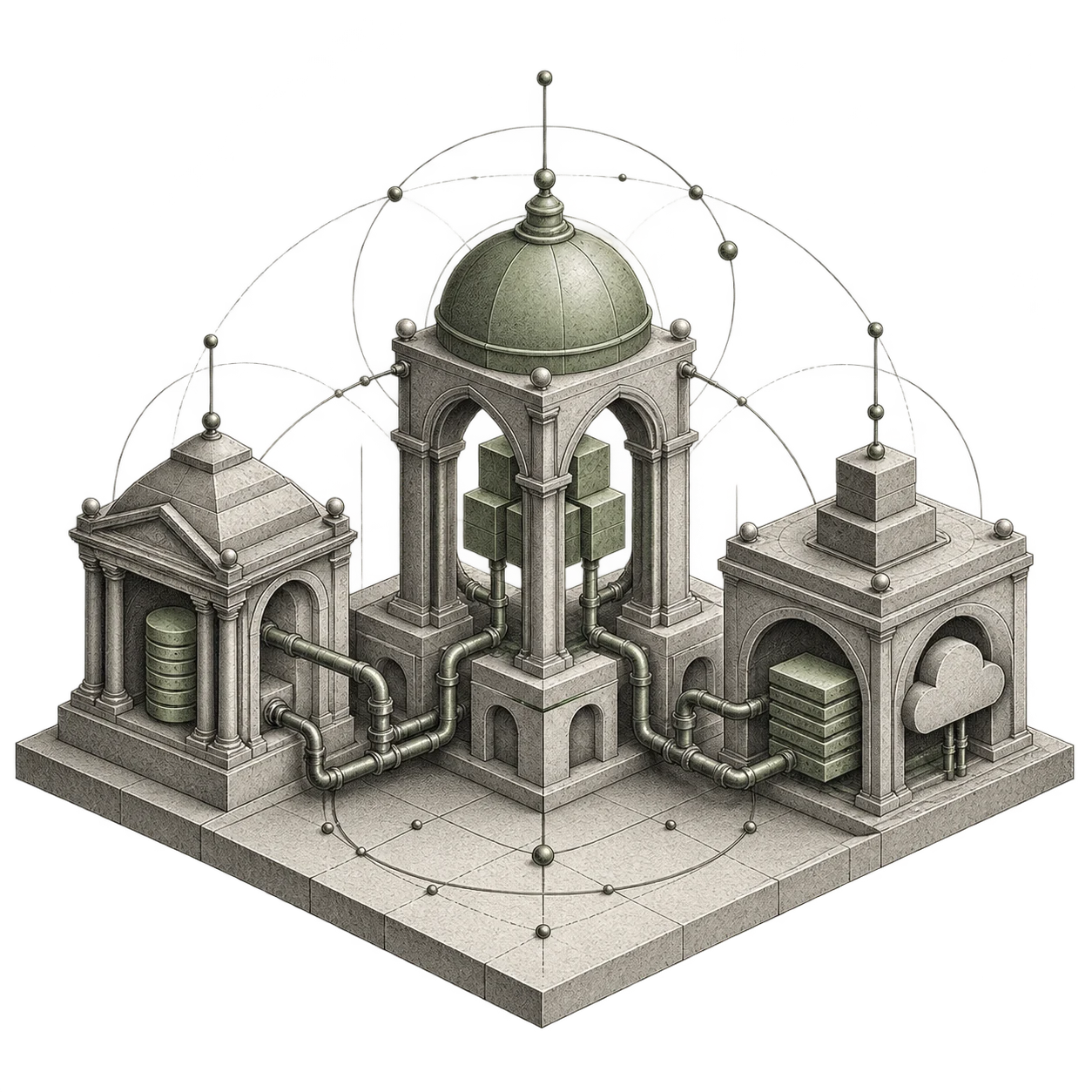
An architecture review of the warehouse landscape, then a target medallion design – Bronze / Silver / Gold with enforced data contracts, naming standards and lineage. Quick wins land during the engagement where they are safe to apply. The readout carries the structural part: governance (Unity Catalog / Microsoft Fabric workspace structure), ownership and RBAC, so one governed layer holds instead of drifting apart again.
The organization gets one governed warehouse layer instead of parallel truths – with data contracts, naming standards and lineage that survive growth.
Bronze / Silver / Gold layers with enforced data contracts, naming standards and lineage – the structure that keeps a warehouse governed and consistent as it grows, instead of drifting into parallel models.
No. The target architecture is matched to your landscape and governance needs – we fix ownership, contracts and lineage first; platform consolidation is a decision, not a prerequisite. No vendor lock-in.
Different layer. Inconsistent Power BI KPIs are usually a semantic-model problem; fragmented warehouses are a platform-ownership problem – parallel models, no contracts. We assess which layer the drift starts in.

Bring your warehouse landscape; we will map where ownership breaks.
Not ready to book a call? Just tell us what's slowing you down and we'll take it from there